


What To Do: Chronic [minor] Rectal Prolapse In My 8 Month Old Kitten. Since The Day I …
What to do: Chronic [minor] rectal prolapse in my 8 month old kitten. Since the day I got her she’s had a swollen rectum and we have gone through every non-intrusive mitigation. An important note: I found her deep in the backcountry of Idaho as a kitten, likely dumped by her original owner. She has tested negative for all abdominal worm parasites through multiple fecal exams. We despite that did two rounds of de wormer. She is on a specialized sensitive stomach diet, we did topical steroids, probiotics and lactulose which she still takes to help control softer stools. Her prolapse as not gotten any better and in earnest seems to be the most swollen its ever been. Dr suggested Coloplexy surgery but stated the risks as we don’t know what the root cause is. I worry she is dealing with sphincter issues and may come out of the coloplexy with incontinence. + that surgery is no joke and invasive. I wonder if there are any other parasite cleanses that would be suggested that are not worms- or if letting her live with it as she has could also be a choice. She does not struggle to poop and doesn’t show signs of stress of pain. Any advice ( and words of encouragement ) would be so helpful.

1 Response
Comments
My Dog Has Ear Allergies. She Shakes And Scratches Her Ear. Her Ear Is Balloon Like. …
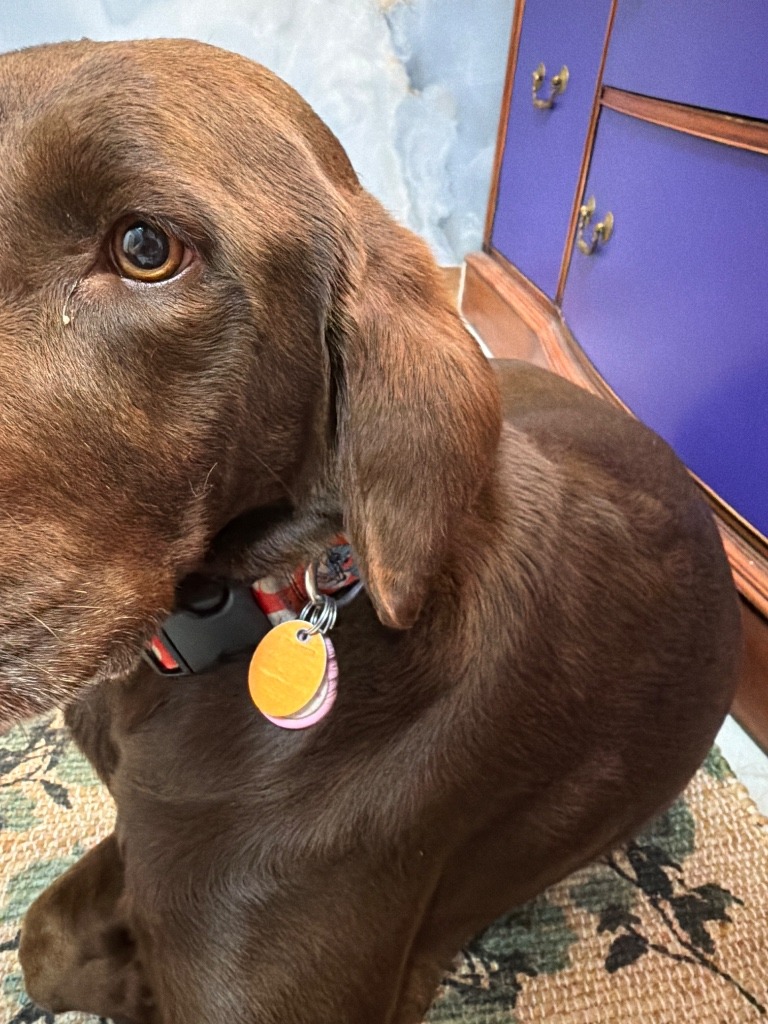
My dog has ear allergies. She shakes and scratches her ear.
Her ear is balloon like. Can this be managed at home?
2 Responses
Comments
-

Krista Magnifico Hello,
The difficulty in trying to manage this at home is that this is a two part problem. First we need to remove the blood from the ear and provide some way to prevent it from happening again. And then we need to figure out why it happened to begin with, or it will recur or even happen to the other side.
The cheapest options are to drain the fluid and place a steroid inside the ear flap. But this has a pretty high failure rate. I often place a drain and leave it in for 3 weeks. But I still need to know if this is trauma (puppy biting eats etc), ear infections or allergies. All have different treatment options.-
Heather Post author We went to the vet for a drain. They said ear infection and allergies. She is taking medication and ear drops. They said from her shaking her head so bad is why the ear got this hematoma. But her ear is now looking like it’s getting big again. She has a no wrap cap on.
-

Hi! I Have A 9 Year Old Pitbull Mix With History Of Mast Cell. I Noticed A …
Hi!
I have a 9 year old Pitbull mix with history of mast cell. I noticed a lump on his chin in April and brought him to the vet for aspiration. It came back mast cell. The vet put him on a dose of prednisone and I continued giving him his daily Benadryl. His surgery for removal was scheduled for 3/19. We did a mass removal and dental at once. When he was finished the vet called and said the prednisone made the mass disappear completely so she did not operate on the site at all. A month later, now that his pred course is finished, the mass has returned on his chin and is clearly a mast cell. I don’t know what to do next because I spent the money I had on his surgical visit on 3/19 with the expectation that his mass would also be removed. Do you have any recommendations on what I should do? Thank you in advance!!
1 Response
Comments
-
Krista Magnifico Hello,
I think the best advice is to go back to your vet and explain your concerns. I don’t know what else to say. Maybe it’s a new one? And perhaps it’s not a mast cell? You really only know by taking a biopsy.
Best of luck. I hope you get some answers.
Hi Dr Magnifico, I Have A 6 Year-old Female Cat Who Came To Us As A Stray …
Hi Dr Magnifico,
I have a 6 year-old female cat who came to us as a stray and always had noticeable creaky purring sounds. She was about 1 year old when we got her. She has recently developed noisier breathing and almost whistling, and the vet said the sound comes from her nose or trachea, not from the lungs. Bloodwork normal, they don’t think it’s allergies. No nasal discharge or coughing. I saw your videos and think it may be a polyp (the vet said it’s possible). another vet quoted me 1800 for ct scan and 1800 for removal. I can’t possibly afford that. Prednisolone helps for 5 minutes then it starts again. I have not tried an inhaler. She is quieter (sometimes completely quiet) when she is asleep. No mouth breathing at any time. Dr says most likely not asthma.
Do you have any suggestions on what else we can try and also would you be able to see her and check for polyp without an additional ct scan (due to cost)? Thank you.
1 Response
Comments
-
Krista Magnifico Hello,
I would post a request for any local vets to pool and see if it is an oropharyngeal polyp. And while under ask them to flush the nose and take a chest Xray.
I Took My Cat To The Vet To Get Unblocked And Not 24 Hours Later He Was …
I took my cat to the vet to get unblocked and not 24 hours later he was blocked again. I paid a $2000 vet bill and now they’re telling me that I have to pay another 2000 to do the blockage again but I don’t have the funds to do that And I’d like to get a PN so this doesn’t happen again, but I don’t have the funds to do it, and the vet told me to euthanize him. But that’s not fair. I wanna try to save his life if I can They told me to surrender him please. I need some advice. I don’t know what to do. I’m just blowing my eyes out every day.
3 Responses
Comments
-
Krista Magnifico Hello,
I’m
So sorry to hear about your cat. IMO all
Of these cats need days of iv fluids and a urinary catheter. The idea that you pay for time versus pay for resolution of a life threatening medical emergency makes me insane. I feel very strongly that time based care ie you pay for a set period of care based on your budget is literally setting these cats up to reblock and subsequently having to repay for the same procedure over again. Add to that a repeated trauma to the urethra and I often feel that we are doing even more damage the second time. So yes I agree we should be doing a PU surgery as the next treatment option if they reblock again. Except this is even more expensive.
I’m so sorry. Your cat needs to be at a place you can Afros and a place that treats him based on his medical needs not a budget and a timer.It’s an ethical injustice and a medical travesty. You and your cat deserve better. I hope you find someone. If you are in Maryland or near my clinic call me and I e will help. Jarrettsville veterinary center in Jarrettsville Maryland.
-
Shelley Post author I wish you were in Edmonton. I wish somebody would help me. I had to take him to the emergency and then they made me sign that I took him home against their advice they will register me with bylaw to surrender him to get him the help he needs or euthanize him. The world is a horrible place for me right now. I can’t imagine euthanizing him.
-
Shelley Post author I had no choice, but to go back and get him unblocked once more and put him on IV drip.
He is peeing a little bit. A kind soul stepped forward & helped me with the payment unfortunately he couldn’t do the PU cause it was to much. But we got him unblocked again. I think the IV fluids helped the second time around. So I’m praying he gets through this. I have a strict diet. CD wet food mixed with water. He’s drinking eating and peeing not a lot but frequently. Please pray he gets through this with me. 🙏
My Dog Needs Cherry Eye Surgery And I Need To Know The Price Range For That. 12 …
My dog needs cherry eye surgery and I need to know the price range for that.
12 dogs later, we have never had a case of this.
Jarrettsville Vet office said to mention Dr Magnifico !
1 Response
Comments
-
Krista Magnifico The surgery is about $800. But we need an exam, vaccines and blood work prior. The way to get a better idea is to call the clinic and schedule an appointment with dr magnifiico.
Or reach out to Helping Hands or Spay Now veterinary surgery.
My Senior Dog Has Progressively Experienced Bowel Incontinence Of Soft, Formed Stool. She Seems To Be …
My senior dog has progressively experienced bowel incontinence of soft, formed stool. She seems to be unaware as a small amount will just fall out as she is walking. She will be 15 this year, is very house trained, and continues to go outside majority of the time. Over the past month it seems to happen more frequently and I’m not sure how to manage it. We also have small children and I’m dreading the day my 18 month old finds it before me.
1 Response
Comments
-
Krista Magnifico Hello,
Your pup needs to see a vet. There are many medical conditions that might be the cause. Your dog needs an examination asap.
Newly Paralyzed Cat/ Bowel Movements – We Have A Newly Paralyzed Cat And She Hasn’t …
Newly paralyzed cat/ bowel movements – we have a newly paralyzed cat and she hasn’t had a bowel movement since Tues 3/17 pm. Hasn’t ate much since then, but also taking gaba & prednisolone. Eating wet food since accident. F/U with vet today to get more advice on manipulating. She’s spicy and difficult to handle at times so I’m worried how to make this work. Hoping to consider stool softener or laxative of some sort to help her with this process. Any recommendations ? I came across your video for the kitty that has had years of constipation and wanted to send a message. Thank you in advance!
2 Responses
Comments
-
Krista Magnifico Hello,
I think it’s best to see your vet asap. I’m worried that the paralysis is affecting the go tract and your cats ability to defecate normally. Any cat with this should be on a canned food diet and maybe even laxatives to keep the feces soft. You also need to learn how to palpate your cats abdomen so you can monitor for constipation and bladder size. Good luck. These cats need a lot of vet oversight. -
Christy Post author I did yesterday- they had NO ONE there to be able to show me how to do this. And actually said they couldn’t do it from the outside, which in the short time I’ve been researching, I know isn’t true: they told me to try miralax overnight and if she didn’t poop by today we have to intervene. Sadly, our cat is extremely touchy and is not wanting us to manipulate her at all. We didn’t feel right letting her go without trying, but I feel like we have no option at this point because if she will not let us express, we can’t keep relying on medical intervention for many reasons. Thank you for taking the time to reply, 🙁
I Rushed My 1 Year 1 Month Male Cat To The Vet Last March 16 And He Was On …
I rushed my 1 year 1 month male cat to the vet last March 16 and he was on catheter until the 21st. Reason for the catheterization is a urinary blockage due to stones. He is currently urinating well everytime he goes to his litter box but my only concern is, he only pooped last March 17. Until today he wasn’t still pooping. We had xray and ultrasound done. Everything is normal as per the vet, he has a gassy stomach. Considering this, he hasn’t pooped now for nearly 5 days, including this 2 days catheter removal. He is also dehydrated despite drinking a lot of water. He is looking at me whenever I eat, he is meowing, he swallows the food (wet/dry royal canin urinary SO) as advised by vet. But he sniffs a little amount of food such as fish and chicken and then taste small portion and will not eat afterwards. He is not vocalizing pain as well and straining on the box, he is also not vomiting. He can jump up our sink to drink water and also walks and is purring. Can you recommend me anything I can give him for him to eat voluntarily and be able to poop?
1 Response
Comments
-
Krista Magnifico Hello,
I would be worried that your cat is not eating enough to form feces. You should see your vet do them to help you with either an appetite stimulant and dietary options to help encourage eating. They also need to do a thorough examination.
AGASACA Diagnosis And Estimate
Our dog Roo was recently diagnosed with a dermal melanoma and during her oncology consult at it was also discovered that she has AGASACA. We are exploring cost saving options and were wondering what others have paid at certain surgical centers for abdominal ultrasounds and thoracic radiographs and potential removal surgery.
1 Response
Comments
-
Krista Magnifico Hello,
At our facility the cost of X-rays is about $300. Abdominal ultrasound is about $350 and surgery is about $3500.

Hello,
In these cases I do the following. Very soft waters down food. So that they don’t need to strain a t all and gabapentin. I also do a purse string for about 2 weeks to allow everything to remain un-swollen.