
Hello
I’m sorry for the delay. If you would like a consult I would be happy to meet you and discuss options. Please call the clinic and ask for an appointment. It is the best place to start.

Ask questions and share about your pet's health to help others.



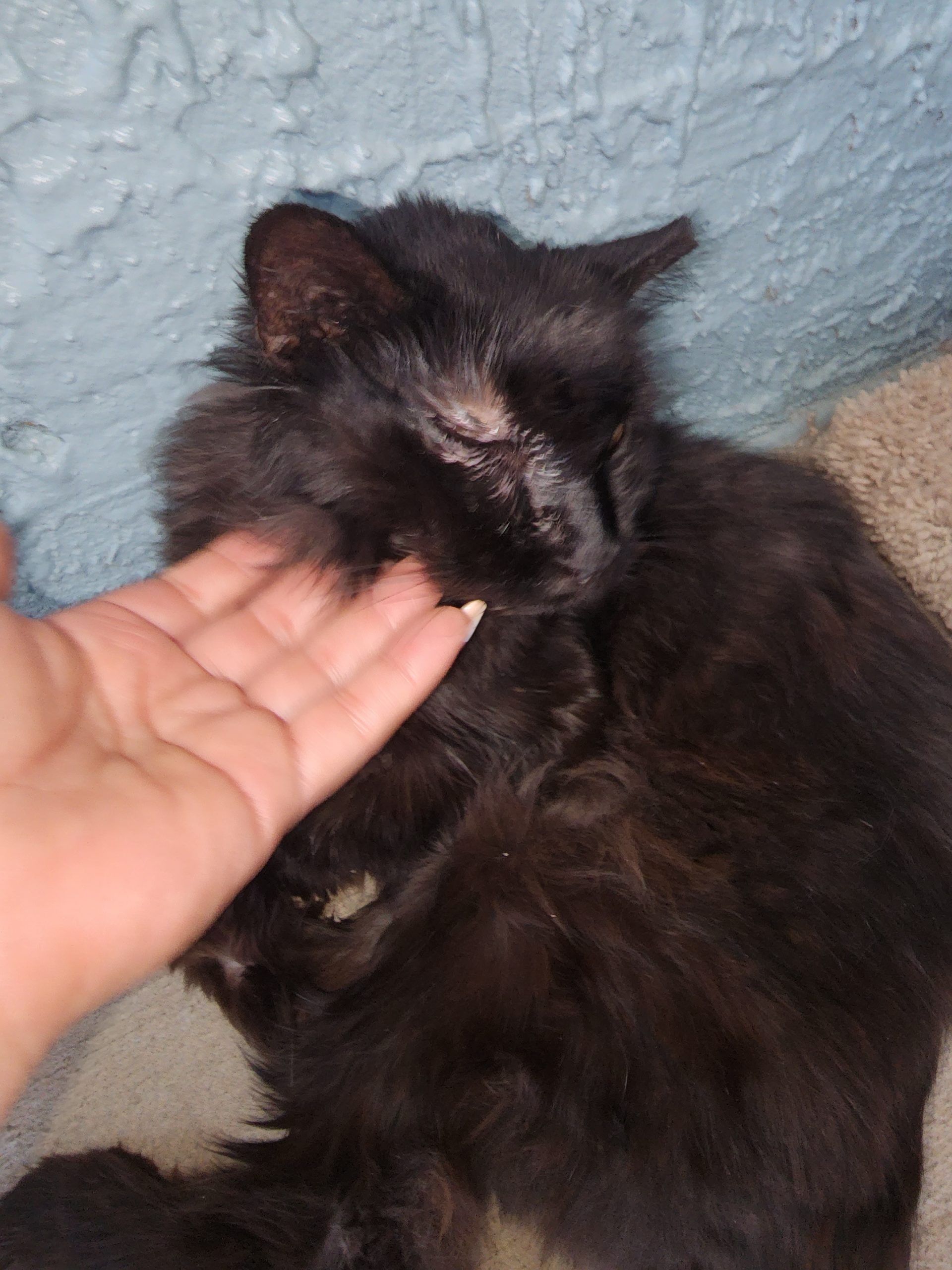
My cat has one side of her face swollen and her eye has become small, with clear discharge, like a runny eye. She is an indoor cat, so no possible fights. She is eating and drinking normally, using litterbox regularly as well. I plan to take her to the vet if it doesn’t get better in two days, does anyone have an idea what it could be that’s causing this? How much the vet would charge as well?
We have a very sassy beautiful 12 year old orange female tabby named Nala. She has been perfectly healthy until about a year ago when she started to sneeze a lot (that rapid-fire sneezing that cats do) and she started to make a snoring sound when she breathes. We initially thought it was just allergies but it didn’t get any better after several months. We took her to the vet and he diagnosed her with herpes and prescribed Chlorpheniramine 4mg crushed in her food. I’ve been giving her this for at least 6 months now and she has not improved. The sneezing has decreased, but the “snoring” has not improved at all. Searching online, we found a video of Dr. Magnifico performing surgery on a cat that had a nasal polyp and we are wondering if this may be what she has. The symptoms all seem to be the same as what she has been dealing with. So we’ve been searching for a vet in our area that performs this type of exam and surgery, and we have found this to be very expensive ($2000-$5000). She is otherwise a very healthy girl, she eats, drinks, uses litterbox and plays and snuggles all like normal. She has lost weight, but now seems to be putting it back on slowly. Dr. Magnifico’s office is only about an hour away and we would absolutely drive down to be able to have her exam Nala and if it is a reasonable price, have her remove the polyp if this was the diagnosis.
Hello
I’m sorry for the delay. If you would like a consult I would be happy to meet you and discuss options. Please call the clinic and ask for an appointment. It is the best place to start.
I have an 11-year old female domestic shorthair cat (Nala) who has been very healthy until around springtime last year when she started to develop a snorty sound when breathing and rapid sneezing fits. We figured it was maybe allergies at the time, as ours were really bad too. But it kept lingering and we finally asked our vet and he was reluctant to do a full exam on her because of the expense, and he also diagnosed her as having herpes, and prescribed Chlorpheniramine 4mg and Duralactin paste 2.5ml for her. I give her a 1/4 of the pill crushed in her canned food once a day, but the paste makes her sick. I have been giving her the pill for about 3 months now with zero improvement. I have been doing a lot of research, and the closest thing I could find that matches what she is dealing with is a video I found of Dr. Magnifico performing surgery on a cat for a nasal polyp. The description she gave completely matches what Nala sounds like with the snoring sounds when breathing and the constant sounds of trying to clear her throat. She has lost a lot of weight because I think it’s difficult for her to eat a lot but otherwise she acts like nothing is wrong, she is very playful, and also eats (best she can) and drinks normally, and litterbox habits are still great. My question is if this diagnosis sound like it could be correct, and if so, is this something that could possibly be fixed without breaking budget?

Hi!
Polyps in our kitty friends are quite common. I am a surgery technician that assists Dr.Magnifico and we have seen and removed more than a handful!
We have noticed not many vet offices check for polyps and typically it’s what we end up finding. (Not always the case as some cats are chronic upper respiratory forever)
This surgery is typically not a budget breaker. Please reach out and never be afraid to ask many questions to your veterinarian!, That’s what they are here for ,
Hi!
We always recommend reaching out to your vet or local shelters and asking about polyps. It is possible to have them removed, however we do see then reoccur in some cases(not all!!) With your cat being 11, your vet may want to dig a little further and see if there is anymore going on.
My cat is 12 years old. We noticed she had lost some weight over a short period of time and booked a visit to see our vet on Monday. Then she stopped eating over the weekend and became lethargic so we took her to the ER vet. They diagnosed her with CKD and it is very advanced. Her values were so high they needed to dilute their sample to get a reading. We were told it would not be inappropriate to euthanize her right then and there or we could hospitalize her but she might not handle the treatment well because of her heart murmur. It was such a shock I had no idea she was so unwell, but I couldn’t put her down without trying anything. She was admitted for 2 days and hydrated and while she did perk up and start eating, her numbers did not go down significantly. She came home and was perky for roughly 45 minutes, then laid down to sleep on our sofa and has been using that spot as home base for the last 2 days. She’ll get up to drink and use the litterbox and greet us but then promptly returns to her spot. She is grooming herself. These are some good signs. What worries me is she has already gone off eating. She didn’t have much the first day but today she licked some gravy off some wet food and has had a few treats. She is less perky already. The vet sent us home with mirtazpine ointment and subQ fluids… but nothing for nausea. My question is: should I force feed her? Should I have a tube put in? Should I let her go? I don’t want her to suffer if it’s her time but I also want to give her a chance if she can still lead a good life. She’s an agreable cat and tolérâtes the sub Q fluids well, though I don’t think she would like to be force fed. I won’t give up on her but I don’t want her to suffer either by putting in a tube or force feeding if it will only keep her with me another week.
I wouldn’t force feed without vet guidance. I would, however, call your regular vet and have a serious conversation about what you can do for her, and what sort of prognosis your vet can give you.
I will say she needs to start eating, so I would get her in to your vet today if at all possible.
I’m so sorry this is happening. It’s scary when it’s so sudden. My heart goes out to you as my stinky kidney cat burps in my face. Let us know what happens?

Kitten with completely atonic colon, possible causes? (Long text ahead)
So Nov. 3th in the evening we got 2 kittens, estimated 6 weeks old, thin. However due to being cold outside they already had very thick fur, so it wasn’t visible how thin they were. Weight was 550 & 650gr.
The finder said they have been more active before and only now they were able to get those two. They borrowed to live traps to get the mother and another kitten.
Both were seen eating. They were treated against worms (Milbemycinoxim/Praziquantel) and fleas (Lotilaner)
Nov 4th: Overnight everything was eaten, poo was solid. Kittens were responsive and alert. To the evening only half was eaten. Poo was still solid.
Nov 5th: Nothing was eaten over night, the little one seemed a bit weaker. I started to feed them with a syringe. They started with diarrhea, but that sometimes happens when feeding with a syringe.
Nov. 6th: They still don’t eat by themselves. The smaller one still seemed weaker, but otherwise it seemed fine. A bit diarrhea. In the evening I found it the litter box, not being able to stand, barely reacting. It hat vomited (at least it looked like it), and still had poo stuck on it. It was immediately brought to a vet. It received glucose solution s.c., something against vomiting, pain and an antibiotics. Lung sounded free, heart (ultrasound) was fine, too. A test of parvovirosis came back negative. I took both of them home that night, so I could feed it smaller portions more often and to give more fluids. 2 hours later to was able to stand again. I fed them every 3-4 hours, fluids every 6 (only small amounts obviously). It was lying on a warmth mat. The bigger one was fine, but avoided it’s litter mate.
Nov. 7th: No further improvement. None of them was eating on their own. The smaller one was still lying down most of the time, sleeping, but would react when I came to feed them. It would stand up and walk to the litterbox between the feedings, but the poo had a weird consistency. Not really diarrhea, but veeeery sticky, so it always carried it back to it’s sleeping place. So I had to clean it before every feeding. A test on giardia was positive, treatment started with Carnidazol. Continue to feed them with a Syringe and fluids for the smaller one. Fluids were always absorbed to the next feeding, but it still was a bit dehydrated (skin fold test). The bigger one would play in between and seemed fine otherwise.
Nov. 8th: No changes in the smaller one during the day, still weaker, able to walk, sit and stand, but sleeping most of the time. Today there was rarely poo in the toilet. I assumed that the treatment started working and it was a good sign (although I already had the feeling that something was wrong… wish I would have trusted that feeling). In the evening it seemed weaker, but would still accept being fed with a syringe. It felt different, less body tension, but would still walk away/go to the t. 10pm feeding. More calm, didn’t want to eat that much, peed on me. Meowed louder during giving the fluids than usual and tried to get away. 2am clock, the fluids weren’t absorbed completely, it’s abdomen felt like a sponge. I only fed a tiny amount. 6am weaker, would lie down immediately, breathing was shallow and faster, meowing, I didn’t feed it, fluids still not absorbed. Rushed to the vet.
-> Heart had a low frequency, breathing fast and shallow
-> X-Ray lungs were free, only a tiny amount of fluids in the abdomen, however the complete colon and stomach were filled with food. There was no visible blockage or air.
-> Ultrasound: Absolutely no movement in the colon/stomach, no blockage or air seen either. Kidneys and liver seemed fine
-> Punctation of the abdomen: ca. 3-4ml of fluids, lots of proteins, a bit of blood. Didn’t look like FIP. Possible that the fluids came out of the colon.
It was given something against vomiting, pain, antibiotics, something to help the cardiovascular system and something to get the colon moving again. To help with its breathing got a mask with additional oxygen. However in the next hour it got worse, so we decided to let it go. After it was gone food came back out of it’s mouth. And it didn’t even smell like it had started to digest.
It’s littermate is still with me and fine. It started to eat on its own yesterday.
Now I obviously ask myself what i could have done better/different. By now I think I should have started with additional syringe feeding earlier – at least with the smaller one. And I should have reacted when my feeling told me that something was wrong, even when there were no obvious changes yet. I somehow have the feeling that I sis something wrong and killed it. Did I give too much fluids (but lungs were free and only a bit fluid in the abdomen)? Did I feed too much? Other kittens eat even more without problems – and the other one is fine.
And what can be the causes for the complete stop of movement in the colon/stomach?
I know that FIP can cause this and an ileus (but there were no visible blockage, everything was filled with food), are there other causes? Can giardia do this?
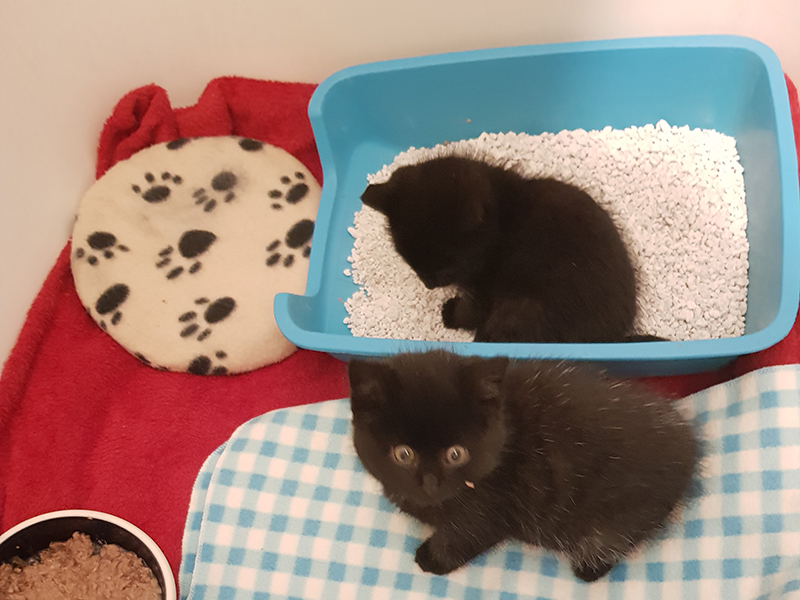
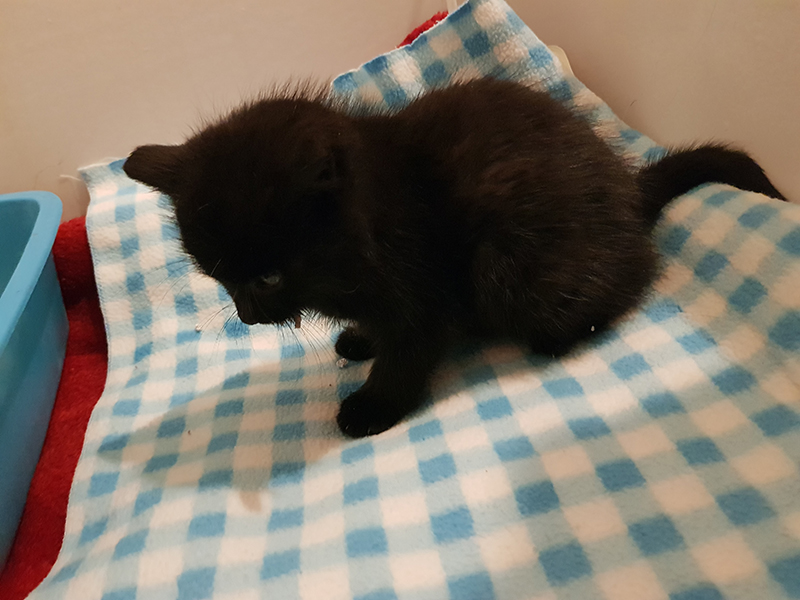
Hello,
First it is important to give yourself a very firm and big pet on the back. You have gone above and beyond and saved these kittens from a slow awful death. Next this isn’t a question about the colon this is a question about what is causing all of the clinical signs you are seeing. Ileus (slow or absent moving gi tract) has many many causes but something caused it. Probably has everything to do with the same something causing everything else you are seeing. There is a huge list of possible causes. Infection, congenital disease, malnutrition before they got to you. Infectious disease like rabies, etc etc. my recommendation is to stick with the basics of keeping them warm, fed, and treated for parasites (internal and external). After that (or before your preference often dictated by amount owner can spend) is to keep asking for second opinions and keep running. Diagnostics. I really applaud your dedication and I have to say as much as sometimes we try we just aren’t able to save them all. This is especially true with kittens. Which have been some of the most rewarding and most heart breaking of all the cases I have seen.
Hello,
thanks so much for your answer and the nice words. Malnutrition would be definitly possible, it’s nearly winter here and they were thin when we got them. Maybe it was too much for the gi tract after not getting much for some time.
What additional diagnostics would you have recommended to do? I think bloodworks could have been an option, but what parameters? Just the large profile or other tests (besides FIV/FelV)?
I added the xRay. I was only present at the ultrasound, where I couldn’t see air. The xRay shows air in the stomach and colon. But otherwise everything is just… filled – theres not really something visible. Kidney and Liver could be seen in the ultrasound and looked normal. The “swelling” on it’s belly is the fluid that wasn’t absorbed – altough it felt a bit harder that a fluid bubble under the skin usually does.
The other one is still fine, active and playing, starting to eat on it’s own. Purring and cuddly. Yesterday we got the 3rd littermate, the mother is nowhere to be found until now. I haven’t seen the new one eat yet, but it was hungry when i fed it with a syringe – and it liked it. So I’ll just feed it a bit too, just not as much. That’s also nice for bonding. But it ate what was in the trap – so it knows cat food. It’s still very afraid, so I guess it will mostly come outside when I’m not in the same room.
We also got another one, a little male that the fidners named Nero – same area but not same place – but same age (a bit younger possibly) and also black furred. But this one is in bad shape, too. Very calm and tired. Lying most of the time. It’s just skin and bones, dehydrated. I haven’t seen it eating or using the litter box yet – and since the other two use it and the towel it lays on is wet sometimes I think it doesn’t really go. But it is able to stand and walk – I think it’s just to tired/weak to do so without need. This one is also fed every 3-4 hours and gets fluids. I heard him sneezing, so maybe it’s getting cat flu.
All were treated against internal and external parasites and no diarrhea until now from the new ones.
Thanks again for taking your time to read my wall of text(s) and answering so detailed.

I could use some advice to keep my dog from eating cat poop. We have 1 dog and 2 cats. On our first floor there is a mudroom with a pet gate with a cat door. The cats have their litter boxes on one side of the mudroom and food on the other side. This arrangement has worked for 8 years. My daughter’s young cat has had digestive issues for her entire life and would poop on the floor outside the box once a week. We tried all different kinds of boxes and litter and probiotics and food but no changes. She also hates the feel of litter. We tried all kinds and newspaper and towels and pee pads…you name it.
For a month she decided to poop on my daughter’s bed twice a week…which of course was a cleaning nightmare. Sometimes she pooped on the bed while my daughter was sleeping in it.
Finally we found a limited ingredient food that worked along side of a probiotic and her poops are now more manageable for her, less painful I’m guessing and pretty regular. We added a litterbox upstairs to my daughter’s bedroom but she would never use it. We moved it to the large hallway outside my daughter’s room where it was darker and more private and she still didn’t use it. Purchased cat attraction litter and after 1 week she finally used the upstairs box to poop. I held my excitement but it’s been 3 weeks now and no more pooping on the bed. Her poops are also a lot less messy and stinky. Now my problem is if she goes at night the dog jumps right up and eats it. I caught her doing this twice but she was too fast to stop. Other times you can smell that she must have pooped but it’s gone. She’s only going upstairs so I don’t want to take the box away. She’s so picky with boxes and how she sits in the box and how it smells a covered litter box won’t work. There isn’t way to put a gate up in that hallway as it’s a super old house and shaped weird. I’m afraid any change to the box will stop all the good progress. My dog probably gets to the litter box before us about half the time–so it’s not every time. My dog is healthy, eats well, is up to date on everything and is well taken care of. Thanks for your patience with the long explanation.
Clevercat litterboxes are a LIFESAVER. Not even my long-nosed Doberman can get into them. That said, now that the cat’s using the box reliably, can you move it to a room with a gate? You can also get free-standing gates for oddly shaped entries…we use one in our puppy pre-K class to block an egress point, and it works very well.
OH and as far as your dog’s nutrition is concerned…for some reason, most dogs REALLY LIKE cat poop. I’m not sure why, Dr. Magnifico might have an idea, but this seems to be a thing even with dogs which wouldn’t normally do this. I agree it’s gross, and I hope you can find a solution which works for your situation.
I have 3 cats and have some litter box issues. I used to have the covered boxes, but noticed that one of the cats was peeing outside the box. So I removed all of the lids. The problem seemed to stop, but then started again on occasion. I bought larger boxes, (I have three of them) and the issue still occurs. I finally discovered it was my cat with colitis. She does pee in the box, but gets so close to the edge or stands instead of squats that it goes outside the box. Is she doing this because of the colitis or a behavior issue? perhaps higher sided boxes would help? I keep the areas lined with pee pads, but they are no match for cat urine. Suggestions?


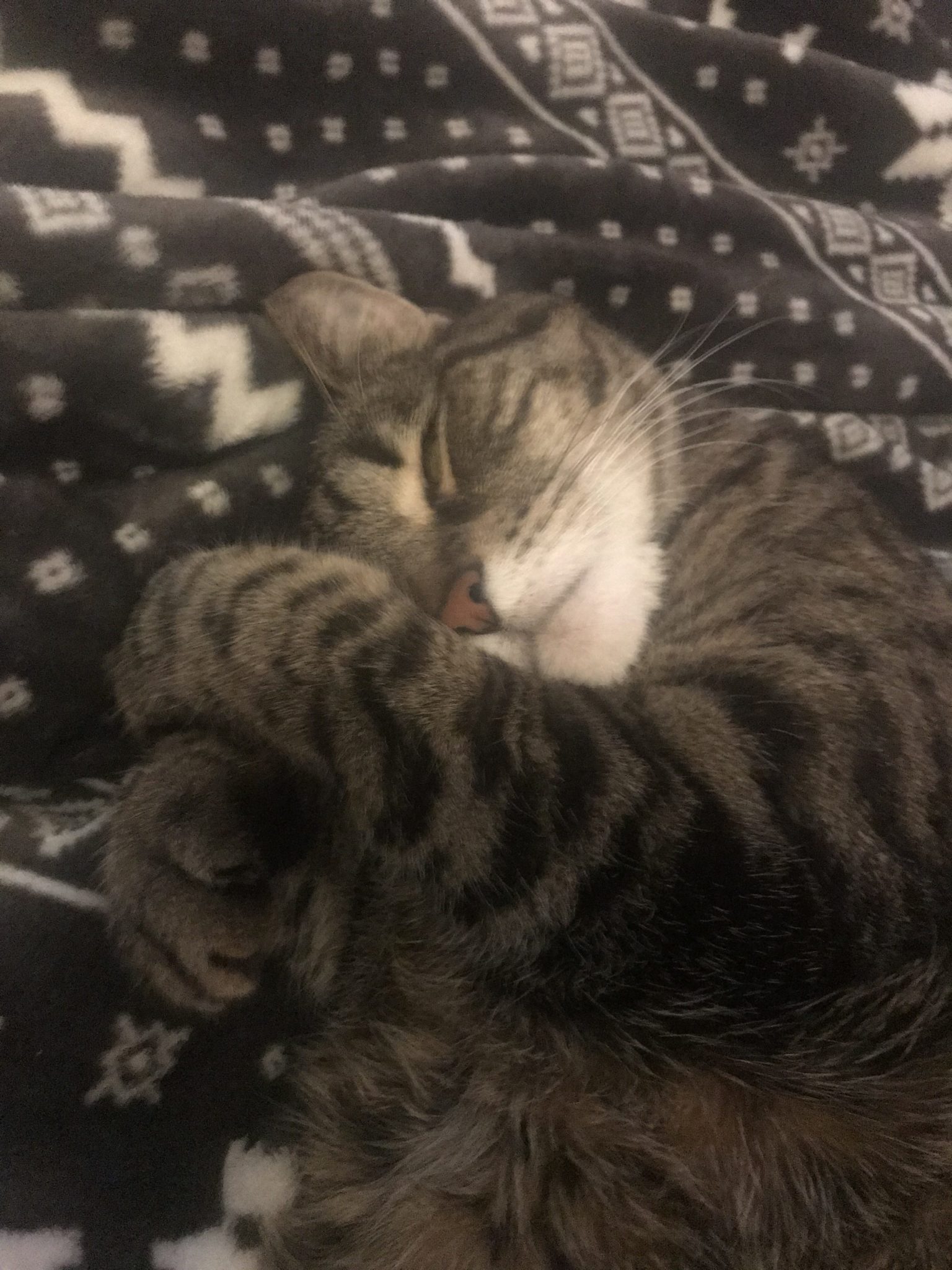
My 9 year old cat is peeing on bath/ kitchen mats. However, he also uses the litter boxes. I have heard of surface preferences in cats but im not sure if this applies since he uses the litter box as well. My mom seems to think hes mad at me because i left him for a day and a half (with more than enough food and water). However, its not the first time this has happened. And unfortunately, i only adopted him about 3 months ago so i dont know his history on litter box use. And i added a picture of him because hes just too cute to be mad at, but the peeing is slightly frustrating. So, if anyone has any ideas or advice or helpful tips it would be much appreciated!

I’d head to the vet, to be quite honest. If he’s clear of any illness, make sure he has two VERY CLEAN litterboxes in different parts of the house.

Dr. Magnifico (and anyone else), a friend has a difficult situation he’s trying to rectify with his cat.
He has a male cat who was treated for a UTI very recently – 2 weeks ago, to be exact. In the past two days, the cat has taken to urinating on a specific spot on the carpet on the same floor as the litterboxes (they have 3 boxes for 2 cats). He is not actively AVOIDING the boxes, he’s just preferring the carpet for urine. He isn’t marking, either – he’s emptying his full bladder in this one particular spot. I’ve suggested cleaning the heck out of the spot with an industrial shampooer with Nature’s Miracle added to the mix, to get the urine out of the pad. What other suggestions can I give him? I have zero experience with a cat with a UTI, and I’m at a loss at the moment.
Just to update, friend rented a Rug Doctor and thoroughly cleaned the spot. Once it’s dry, he’s going to do another round of cleaning on the spot.

I’m wondering if he out the box there, would the cat use it? I know it’s not a permanent solution, but it may help short term. Then perhaps move the box back little by little, IF the cat starts using it again. Just a thought….
Hello,
Here’s my gold standard recommendation. Serial urinalyses (three to be exact) to look for any evidence of a urinary issue. This might include a culture and sensitivity. I also like an X-ray and ultrasound. Point being work out a medical issue to the ninth degree!! At the same time start to address behavior issues. I have a few blogs on “inappropriate urination”. I think (hope) that I have added all my secrets and tips to them. If things get bad (like to the point of considering giving up use the drugs!!!). Try fluoxetine.
Sarah – Thanks! I suggested the box move. Even if it’s just plopping ONE box in that spot, it can’t hurt, right? I don’t think they’ve furnished the basement yet, so it’s a great idea. 🙂
Dr. M – THANK YOU! I’ll recommend another urinalysis. My gut feeling is it’s not quite gone, especially when this started a day or so ago, and he was seen by their vet 2 weeks ago. I’ll recommend another visit today. I’ll also dig through the blog. 🙂
Update! He will cover the spot with plastic and put a litterbox on top of it, and he’s trying to get his cat in today to get a urine sample captured today or tomorrow. He also washed the spot again before returning the Rug Doctor this afternoon.
Thanks a ton, ladies! I’ll keep updating as things progress.

are they declawed? some cats dont like the feel of the litter. have several types of litter boxes high, low, covered, open, etc. to encourage proper elimination
I have been feeding him water through a straw to make sure he stays hydrated.
I am getting concerned that he’s not eating; this isn’t like him.
He just tried to use the litterbox but couldn’t go. Probably because there isn’t much food on his belly.
I have given him two tiny portions of a pepcid tablet today, spaced out over the course of the day to hopefully ease his tummy but I don’t think it worked.

Hello,
Head to the vet asap. I say this because anything potentially involving the eye whiten be seen asap. Otherwise I would worry about URI regardless of whether indoor or out. At my clinic the exam is bn $45-85 depending on if you are an established client. Eye meds are about $30 and the same day other oral antibiotics.