
Hello,
I’m sorry to hear about your cat. If you would like a consult at the clinic with me you can call the clinic and leave me a message. I will call you back and see if we can arrange a time to meet. 410-692-6171. Dr Magnifico

Ask questions and share about your pet's health to help others.



My almost 8 year old Golden/Lab mix has the worst breath I have ever smelt. We have looked in his mouth and do not see evidence of any tooth infections or abscessed teeth. Our Current vet told us that “some dogs stink.” It is to the point that we cannot invite people over our home with the fear that he will touch them and make them smell. It is nauseating. We were told they could put him under and evaluate further for $3k + but that is not in the budget. Are there any other solutions? Can you help @Jarrettsvillevet? @jarretsvillevet@gmail.com

Neurological Problems in kitten after eating
In November 3 kittens came to our shelter, estimated 8-10 weeks, healthy looking and acting. Shortly after one of them started to show neurological symptoms – weak hindlegs, wobbly walking, uncoordinated behavior – but was alert, cuddly and tried to play. It lasted for ca 1 hour and then he was back to normal. We saw this happening 2-3 times a day and linked it to him eating. Of course he has seen a vet several times by now – but we haven’t found anything wrong so far.
– is fed grain and sugarfree food, various brands
– several bloodworks (around 10 by now) – our own lab and external lab – 2 came back with elevated leukocytes, everthing else normal, at one point the external vet was worried for leucemia.
– x-ray and ultrasound – normal
– urin test for liver shunt (negative)
– ct scan of the head (brain) and abdomen (liver) – normal
– bloodwork for medasthenia gravis – negative
– bloodwork for FIP – negative
– fecal sample – showed giardia at one point, were treated succesfully
– is by nowneutered, dewormed and vaccinated – everything went good with these.
He is otherwise acting normal, active and playful. Has anyone experienced something similar and found the cause? Any more ideas what we could look for?

Finnegan is a 3.5 yr old male cat with serious nasal polyp symptoms – sneezing, noisy/labored breathing (snoring, stridor), persistent nasal discharge and one runny eye. He did two rounds of clavamox and one round of Doxycycline and nothing worked. I took him to two in person vets (including an emergency vet) in the NYC area and his blood work and urinalysis came back unremarkable. From the research I’ve done I’m sure it’s a polyp or something of the sort. The internal medicine places in my area are quoting me 5-10k just for a biopsy and they don’t have openings until mid January. Please help! I am able to travel with him in a car up to 6-8hours and will go where I can get him help. He is constantly snoring and I have to flush him out throughout the day. He is still eating but has lost a bit of weight due to this going on so long and progressively worsening. Last year he had FIP and he made a full recovery from the 87+ days of shots. Thankfully that has not returned according to his lab work but makes sense that he is more susceptible to other illnesses due to a weak immune system.
Hello,
I’m sorry to hear about your cat. If you would like a consult at the clinic with me you can call the clinic and leave me a message. I will call you back and see if we can arrange a time to meet. 410-692-6171. Dr Magnifico
My 13 year old lab/husky mix licks his paws. It started a few months ago with just a little, now it is almost all the time. I have added a daily probiotic. He has experienced negative reactions to antihistamines. His adoption folder said “No Antihistamines”. Three months ago, the vet gave him a shot which only made his sluggish for about three weeks. Suggestions? preferably with out injections or medications.
In most cases, this can be allergies and you need to follow up with your vet or a dermatologist. In the vet practice where I work, we talk about food allergies so possible diet change. You can use an e-collar to prevent him from getting to the spot. Washing or wiping down his paws when he comes in from a walk may also help. Medications for allergies include Apoquel, Cytopoint, and Zenrelia, and some sedatives may bring him relief while his paws heal.
About 2 months ago my 11-Year-Old English chocolate Lab started developing a cough. It started off mild at first with a couple coughing fits here and there. I got her to the vet as soon as I could get an appointment. She was ruled out for kennel cough because she’s up to date on shots, she never is boarded and she never goes to dog parks. They started a round of antibiotics, and cough suppressants. It didn’t seem to work so we went back. They did a lot of tests which of course was a lot of money. She’s diabetic so congestive heart failure was a concern but through testing and an X-ray they said they don’t believe it has to do with her heart & there didn’t seem to be fluid around her lungs either.. She was then put on steroids because they thought it might be inflammation. It didn’t seem to help any & her cough has only gotten progressively worse. We went back again and now they put her on a different round of antibiotics & another script that I have to fill at a human pharmacy for Codeine I believe. She has coughing fits almost every 20 to 30 minutes and sometimes with rubbing of her neck it helps calm them down. Her coughing spasms generally produce a lot of phlegmy spit up. I’ve spent more money than I have to try to get her help but we haven’t been able to get any answers. I was told it could possibly be Laryngeal Paralysis but the only way to truly confirm was to take her to a specialist and spend a lot more money to put my 11-year-old senior diabetic dog under sedation for an invasive procedure to diagnose. I’m not even sure what the fix for that would be if there is one and I’m sure it’s thousands more $$$ for a girl who may not make it through all that. It’s heartbreaking watching her struggle., I don’t really know what to think or do, just at a devastating loss watching my poor girl suffer. Within the last week, my once always hungry Labrador who never turned down any type of food down has stopped eating her normal food and treats that she used to love. She now only accepts wet food and soft meaty treats. I’m not really sure where to go. I don’t think the ER is the best answer here and again I’ve spent way more money than I even have to try to find an answer. Just trying to find any guidance/advice/assistance/suggestions and/or answers that I possibly can. Thank you in advance.
Hello,
I’m sorry that you are having so much difficulty finding the cause to this.
There is no way around the fact that some patients come to us with more difficult conditions than others. When we struggle for the answer the best way to get to the bottom of the problem is to get a second opinion and a new set of eyes. I don’t think there is anyway around seeing a new vet and probably spending more money to rerun some of the tests.
The other option is to see if your vet can send the X-rays to a radiologist for review and ask for a vet consult via the lab work provider they use. For cases like this I can lean on a specialist to help me with the difficult cases I see. I use ANTECH and Idexx for my lab services and they both offer online consults for vets. They also both offer radiologists to review my X-rays The phone consult is free and the radiologist review is often about $150. It might help.
Otherwise you are stuck with just trying additional medication to see if they help.
X-rays also have limitations and a CT scab might be needed to see the area of the throat or chest causing the issue. I’m sorry I wish I could help more.
Hi. I have an almost 6 year old lab who keeps vomiting when she eats or drinks. She is otherwise happy and doesn’t appear to be in any pain but does appear to be losing weight (she’s a heavier build). She wants to keep eating and drinking though and not having any other problems. Is there something I can give her to resolve the stomach issue or could it be something more serious?
This sounds like it could be a partial obstruction in her gut. That’s something I’d consider emergent. Please get her to the vet.
I agree with Laura. I also worry about pancreatitis and Addisons. Although there are other possibilities. Please see a vet.

A question for Krista Magnifico:
Hello! Hoping to get some advice on recommended next steps for my cat, Sammie, who is being evaluated for IBD vs. small cell lymphoma.
Sammie is 17 years old and is overall quite healthy! Throughout the time I’ve had her, she’s had a history of vomiting a ~once per week or two (sometimes more frequently). Vomit is usually clear, foamy. No other GI issues or health issues otherwise. She is active and energetic, and has not had any health issues until ~1 month ago when I noticed she stopped eating as much as she previously did. She stopped eating her dry food altogether, and seemed to become quite picky with her wet food. I initially thought her teeth may be bothering her because of the avoidance of dry food, so I brought her to the vet.
Vet found that she had lost a couple of pounds, unintentionally. Based on presenting symptoms, vet thought she might have a GI pathology so ordered an abdominal U/S:
Ultrasound, Abdominal Study Outcome:
Kidneys: overall normal size but mild reduction in detail and small mineral foci. Trace pylectasia noted w/out ureteral disension.
GI: Avg SI thickness normal. Mild corrugation is noted in some regions and some ileus (luminal fluid distension up to 4 mm w/ reduced
peristalsis) noted w/out obstruction. No discrete abnormalities appreciated throughout the small intestines.
Caudal abdominal nodes are prominent to mildly enlarged and rounded w/ smooth texture. One irregular cystic structure noted near right
kidney. The mesentery around the ileus segments is mildly hyperechoic.
A:
Intestines most consistent w/ enteritis
Nodes: r/o reactive vs other
Cystic strucure: r/o benign mesenteric vs inflamed node
Kidneys have evidence of chronic disease.
Here are her prior labs:
PRIOR LABS:
7/15/24: Wt loss 0.28 lb; PCV: 40/7.6; Chem18: BUN 41, creat 1.7, K+ 4.3, phos 4.2
U/A: USG 1.019, pH 6.0, rare wbc/rbc; no bact/cryst; cobalamin: 437; folate: 11.2
2/13/24: Wt loss 0.8 lb; CBCcomp: hct 44, diff wnl (clots in sample; rec. resubmit)
Chem25: BUN 40, creat 1.3; T4: 2.8; SDMA <10
U/A: USG 1.025, pH 6.0, rare wbc, no rbc/bact/cryst, rare fine gran casts.
1/19/23: Wt loss 0.4 lb; CBC: (hct 40, diff wnl); Chem25: (BUN 32, creat 1.3)
T4: 1.8; U/A: USG 1.051, pH 6.5, 1+ prot, rare wbc, no rbc/bact/cryst
11/19/21: CBC: (hct 46, diff wnl); Chem: (BUN 34, creat 1.5); T4. 1.9; DGGR lipase 9
U/A: USG 1.053, pH 7.5, rare amorph. crystals, no wbc, no rbc
6/17/22 Wt loss 0.16 (as desired); USG 1.040; SDMA: 11
Most recent A&P:
A:
1) Intestines most consistent w/ enteritis (IBD vs SCLSA); ileus likely cause of decreased appetite.
2) Nodes: r/o reactive vs other
3) Cystic strucure: r/o benign mesenteric vs inflamed node
4) Kidneys have evidence of chronic disease ; in keeping w/ previous lab findings.
P:
1) Rx: metoclopramide 5 mg: 1/4 tab po every 8-12 hrs.
2) Continue vit B12 as Rxed.
3) picked up Mirataz but hasn't started it yet. Rec. give. metoclopramide for 2-3 days and then if not improved appt, start Mirataz.
4) to consider presumptive pred tx vs ex-lap for biopsies.
Sammie is seeming to eat better with the metoclopramide.
My question:
Is pusuing an ex-lap for biopsy recommended vs. empiric tx for IBD with steroids vs. empiric tx for SCL with steroids + chlorambucil.
Thank you!!!
Hello,
Well let’s all take a collective moment to applaud the work up!! I say this because that’s a breath of fresh air!! I think that a couple things warrant a little further discussion.
First it sounds like your GP has done a very thorough job,,, but,, done it all in house. Which in some cases is the best we can do. But. Have you been offered a referral to an internal medicine feline practitioner? If you can find someone who is BOTH great. If not go to whoever you can get in with.
Next have rads been done? And assessed by a radiologist? At least for thorax?
I know it might sound crazy but also check anal glands. Some of these older cats are so uncomfortable they stop eating
Add an appetite stimulant. There are numerous options.
Ask for an internal medicine consult via your lab services. It’s a phone call and It’s free. It has been helpful in some cases. Ask them about budesonide vs. prednisolone if you are going to start treating for INS. Which to be honest I would do over a biopsy for a cat this age with these potential differential diagnoses.
I also add vitamin B12 and cobalaquin and immuquin to these guys. The other medication I like is cerenia and learning how to give SQ fluids at home for the kidneys. You also need a phosphate binder ( I think?, please inquire), we use naraquin. Maybe ask about azodyl too.
… and I know it sounds like I am spouting out a lot of meds… but I gave my older cat solensia when she was a nightmare of unhappiness and it really helped.
And let’s not forget pain meds. Every (EVERY!!! ) single patient deserves them. I like gabapentin 50-80 mg as needed.
Please keep m posted. Very best of luck.
Krista.
Dear Krista,
Thank you very much for your response!
Sammie is eating much better since starting metoclopramide. She is finishing all the wet food we give her, and chases after me when I am preparing it for her! She’s also having bigger sized BMs. We also have her on a weekly injection of B12 for her borderline low levels.
One point to clarify – we are lucky that Sammie’s vet is a feline-only practitioner. Based on discussions with her, she seems to recommend proceeding with the ex-lap for the biopsy and that cats “bounce back” quite quickly after the procedure. We are hesitant, however, given it seems quite invasive.
At this point, we are deciding if the is worth it, or just to empirically treat her with steroids for presumed IBS (vs. SCL). Based on your input, it seems you would err on the side of not doing a biopsy in a cat of her age?
Thanks,
Carla
My 1 year old dog (1/2 lab, 1/4 German shepherd, 1/4 boxer) has a large, perfectly round red bump on her face. I have researched and see potential answers but we are currently out of town and cannot take her to the vet yet. She is very important to me so of course I am concerned, but I would like opinions on whether I should be panicking as much as I am according to the photos I provide. Some articles say cancer, others say histiocytoma.
Hello,
The only way we can accurately diagnose any kind of mass is with submitting a piece of the tissue for biopsy or histopathology. If the mass is small and not bothering your dog you probably have a little time to monitor it and don’t have to rush to the vet. If it isn’t going away or if it is getting larger I would see a vet. In a dog this age I often talk about whether it might be a histiocytoma. These are usually benign and go away over a few weeks.
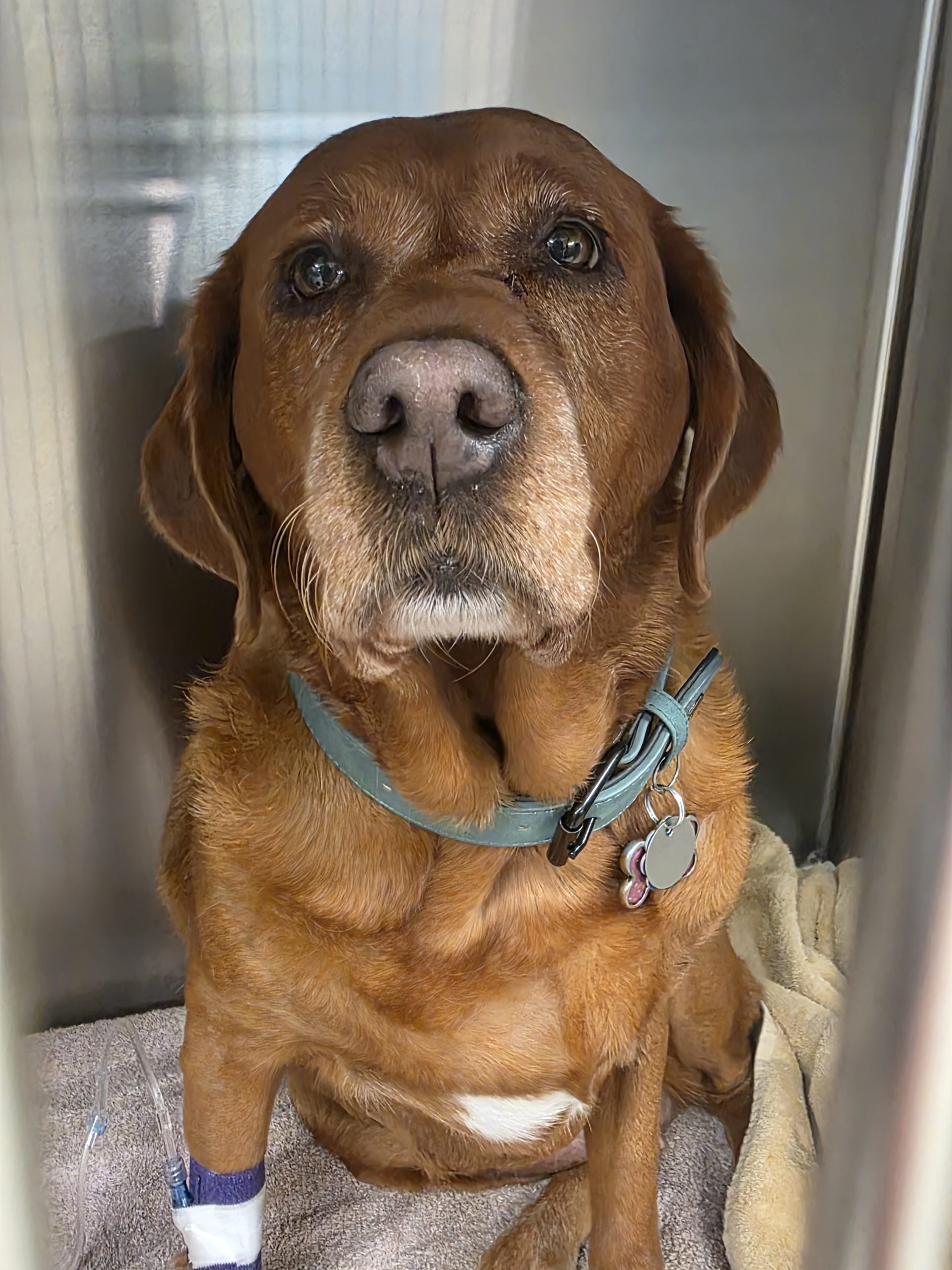
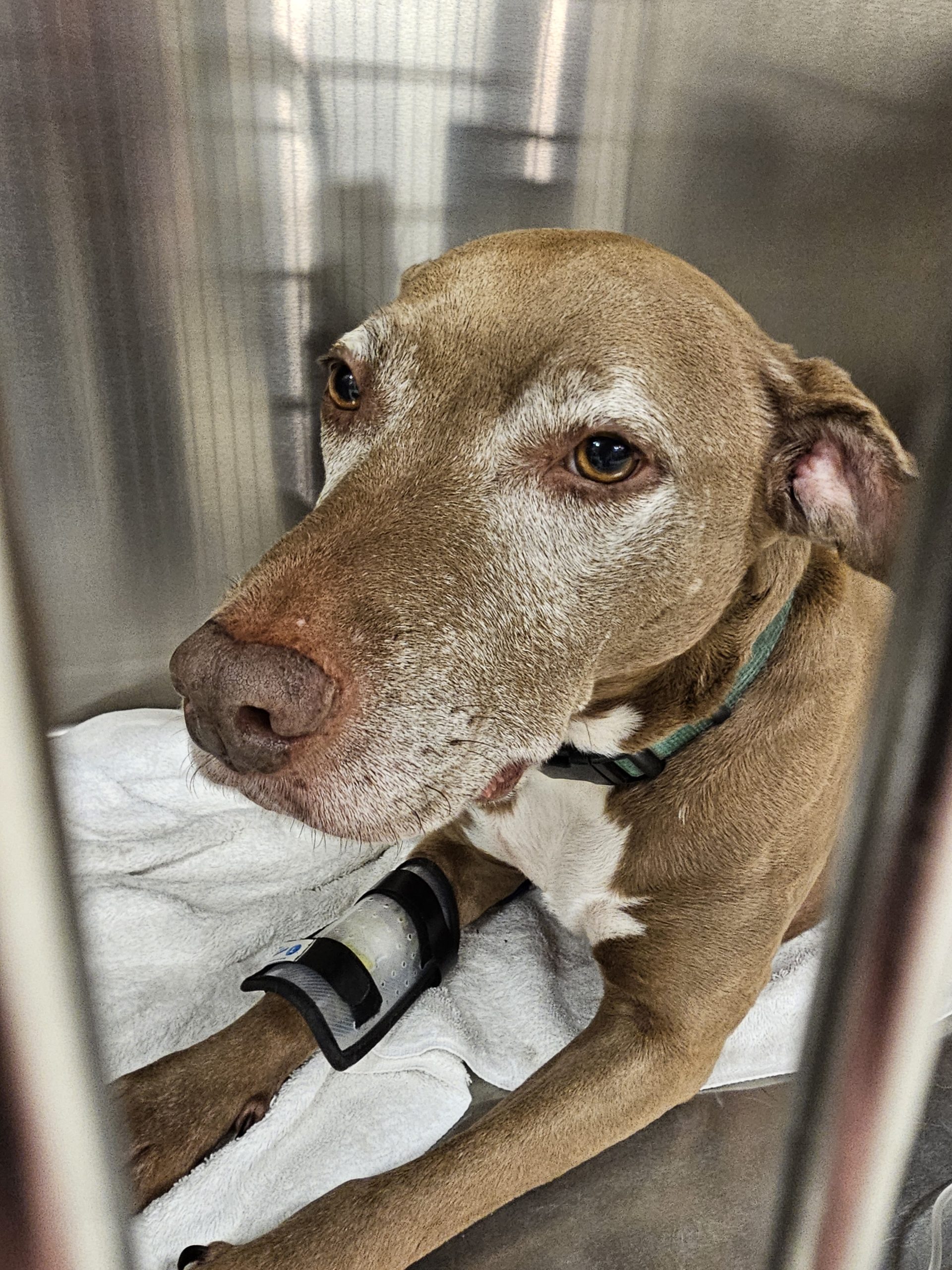

To add: This started about 2 years ago but has gotten progressively worse over the past 6 months- 1 year. We have switched his dog food brand to see if that would help but he has always been on lamb and rice as he has a chicken sensitivity. I have tried powders, drops in his water, cleansing wipes, and raw hides with CHG. Nothing even touches the smell. I would describe it as a decaying wound smell.
@kristamagnifico
Hi Allison, Jarrettsville Vet’s dentals are usually about half of that if that’s what’s needed. You can call the clinic and make an appointment for an exam and have one of our vets take a look.