
Question
Profile Image
Pavel | 1 month ago
Hello Dr. Magnifico, My 2-year-old Indoor Male Cat Has Had What Appears To Be Three Urinary …

Hello Dr. Magnifico,

My 2-year-old indoor male cat has had what appears to be three urinary blockage episodes within the last three weeks, and I’m looking for advice because we are running out of options financially.

About three weeks ago, he suddenly couldn’t urinate. I took him to our veterinarian. They expressed his bladder, and he passed what they described as a plug. They said he should be okay after that. Bloodwork was done, they found bacteria and gave him an antibiotic injection. They also performed a urinalysis and found crystals in his urine. However, we were not told to change his diet or given any specific recommendations.

He has always eaten dry food because he has never liked wet food. This is my first pet as an adult, so I didn’t realize how important diet could be for this condition.

About two weeks later, he became unable to urinate again and he also vomited twice. We got him back to the veterinarian. They took X-rays and said there were no bladder stones, but that he had another urinary blockage. They recommended hospitalization, anesthesia, catheter placement, and flushing his urinary tract. He stayed at the clinic for two nights.

Before discharging him, they told us there was no longer any blood in his urine, removed the catheter, and said he was okay to go home.

He has now been home for about 30 hours, and as far as we can tell, he still has not urinated. After watching several educational videos, I tried to gently feel for his bladder. It does not seem very large or hard, but the fact that he hasn’t urinated for over a day makes me think something is still seriously wrong.

Yesterday after coming home he was relatively active and walking around. Today he has mostly been sleeping all day. He has not vomited today, but he is eating very little, drinking very little, and for the last several hours he has barely moved.

Over the last three weeks we have already spent about $4,000 on his treatment, and unfortunately we simply cannot afford another expensive hospitalization.

I understand that this may be an emergency, and if he is truly blocked again, he may need immediate veterinary care. However, before making another decision that we may not be able to afford, I would be very grateful for your opinion on whether there is anything else we should consider or whether there are any reasonable alternatives.

P.S. I have watched several videos on your YouTube channel, and I truly appreciate the time and effort you put into helping pet owners. Your videos have already helped me better understand what my cat is going through, and I’m very grateful for everything you do. Thank you.

2 Responses

Comments

  1. Krista Magnifico

    Hello,
    If he is struggling to urinate, or only producing small amounts of urine then this is an emergency. If he is acting normally then please see your vet asap. If he is blocked there might be affordable options to investigate. If you are near me please call. If you are not look into the Pet Good Samaritan Fund in their website. They may be able to help.

    1. Pavel Post author

      Thank you for your response. I will be finding an option to get vet help tomorrow morning.
      We are in Texas, otherwise I would for sure contact you practice right after I saw your YouTube channel.
      Thanks again.

Question
Profile Image
Alexis | 1 month ago
Good Morning Dr. Magnifico, On June 15 And 16, I Watched Videos Of You Identifying And Removing A …

Good Morning Dr. Magnifico,

On June 15 and 16, I watched videos of you identifying and removing a polyp from a black and white cat “Pip”. The list of Pip’s symptoms match up perfectly with my cat and I thought – WOW – here is the vet with the answers I have been looking for! I am located in Thurmont, MD.

Since taking on my stray cat nearly 2 YEARS ago, she has seen 3 different vets and her symptoms have never resolved:

Persistent, loud snoring and snorting
Non-responsive to different antibiotic treatments (also non-responsive to steroids and antihistamines)
Chronically snotty – persistent nasal discharge
Chronic increased respiratory effort / visual abdominal breathing
Chronic sneezing (as well as intermittent fits of sneezing)
Intermittent eye discharge from inner corners
Head shaking / ear rubbing

In December of 2024, I rescued Sally who was posted on Facebook as “stray cat – very sick and needs help”. I have been interested and active with TNR, colony caretaking and fostering, as my time and budget allows, for the last 5 years. My intent was to get her the vet care she needed, foster her temporarily, and get her on the waitlists at the local rescues so she could eventually make it to an adoption center to find her forever indoor home. Sally was underweight and displaying upper respiratory “cold” symptoms. Runny nose, trouble breathing, sneezing. I assumed URI.

Sally had 3 visits at a local vet clinic (Thurmont, MD) in December 2024, January 2025 and March 2025 (two different vets saw her here). She was estimated to be between 10 and 15 years old. Per the vet, “her canines have dropped but her eyes look great.” She tested FIV/FELV/HW negative on two separate occasions. We tried several different antibiotics to treat her. We sent out a PCR culture, which returned positive results only for Calicivirus. We also ran a test on her kidneys which had normal results. I had a follow-up discussion with the vet the week of March 31, 2025 because her noisy breathing had not resolved after 4 months of being in a controlled environment. He said that because we’d tried several different antibiotics at that point, and at that time the vet said he did not see any visible polyps in her mouth or ears, his next recommendation was to refer me to a specialty clinic. I said that I wasn’t able to commit such significant additional funds to diagnostics at a specialty clinic, so as a last-ditch effort he prescribed a steroid to see if that would help clear up her breathing. It did not.

I often take my friendlies / kittens to a low-cost clinic in Frederick, MD for vaccines and snap testing before they go to adoption centers. Earlier this year, I discussed Sally with the vet that runs the clinic and he assured me he likes “puzzles” and would be happy to do an exam on Sally at his regular practice in Frederick, MD to see if he could find the cause of Sally’s symptoms. On April 11, 2026 I took Sally to see this vet and he almost immediately noticed an infected tooth. He advised that she needed the tooth removed and other diagnostics wouldn’t be accurate until the tooth was resolved. On April 17, 2026 Sally had the tooth removed under anesthesia. Unfortunately, her chronic rhinitis and all other symptoms have remained unchanged. This vet has now recommended taking her to a specialty clinic.

Sally has lived in my garage with 1 other cat for over a year and a half. The other cat has never developed any illness or health issues – which adds to the theory that Sally’s symptoms are not due to a virus. I’ve also had dozens of other foster cats in and out of the garage over the past 2 years and again, none have developed illnesses that would indicate she has a contagious virus. I feel that the positive Calicivirus results (and also the infected tooth) have muddied the waters on the path to finding answers.

Adoption centers won’t take her until her symptoms are resolved. I cannot afford to take Sally to a specialty clinic. Project Hope was able to assist with a little bit of financial support on her most recent vet bills, but I’ve spent over several thousand dollars in vet work on her and I simply can’t afford to continue. I feel terrible that Sally isn’t getting the love and attention that she really deserves in her golden years. She does have the other cat with her in my garage space, but she deserves a family.

I am grateful for any guidance and expertise you can share. I would love to bring Sally to see you.

2 Responses

Comments

  1. Krista Magnifico

    Hello,

    I appreciate how much time and affection you have provided Sally.

    It also sounds like you have done a very thorough work up for her.

    The only things I might consider trying are a skull Xray and nasal flush. It doesn’t sound like there is a polyp bc it sounds like they have already checked for this. There are certainly some cats who struggle with chronic upper respiratory signs due to chronic inflammation on the nose. There are also some cats who have a mass or tumor in the nose.

    I have a 14 year old cat that I have had since she was a kitten and to this day she is still almost always a snotty mess. She too has been on everything possible to try to cure her.

    I don’t think I have much more to offer in the way of advice. I know you have financial concerns but in some cases we just don’t know until we do all of those tests as we try to rule in and rule out possible conditions and diseases.

    Thank you again for taking care of her.

    Dr Magnifico

  2. Alexis Post author

    Thank you kindly for the time you have taken to read and reply to my message! May I call the front desk to make an appointment for Sally to come see you for the skull Xray?

Question
Profile Image
Meredith | 8 months ago
My Four Year Old Male Doberman (Oskar) Seen At Emergency Vet For Excessive Vomiting (10 Times Right …

My four year old male Doberman (Oskar) seen at emergency vet Sunday 1/4 for excessive vomiting (10 times right after breakfast) . X-rays /labs/fluids. Suspected hiatal hernia. Vomiting has stopped. They felt he was critical. They transferred us to a larger ER as they were not equipped to handle this. Ultrasound and another xray performed. Dog is stable. First two vets at this location felt wait and watch. Third vet says we need to repair with surgery. Sending us to internal med for barium swallow. We are at about $ 6000 so far. Thank god we have insurance.
History of intermittent regurgitation while eating. No other symptoms. No reflux. No drooling. No weight loss. Only happens in the mornings after breakfast every few months. Nothing as severe as Sunday. Only once or twice then done. Happy energetic dog. History of allergies. Testing done. Tried immunotherapy Itchy skin , runny eyes. Managing on raw diet last three years. Cleared his skin for the most part. Avoided apoquel and cytopoint. Used Zyrtec. Previously tried hydrolyzed protein foods at around a year old. This is when regurgitation started ( coincidence? )he would also refuse to eat it. Bottom line do you think we should we consider surgery ? We do yearly echos and own our own holter monitor. We pinch penny’s to give them good care as these dogs mean so much to us. Feel we are being pushed into a very expensive and possibly risky surgery and I HATE putting my dogs under anesthesia. My own vet left the practice and I’m trying to find another that might be a good fit. I’m in NH and it’s not easy. Thank you !

1 Response

Comments

  1. Krista Magnifico

    Hello,
    These are one of those cases where too many opinions can make it even more confusing. Try to follow the advice of a vet who is both credentialed and trustworthy. Be honest about your thoughts and abilities and work together to find an answer that everyone is comfortable with.

    Very best of luck.

Question
Profile Image
Meredith | 8 months ago
Four Year Old Mn Doberman Seen At Emergency Vet For Excessive Vomiting (10 Times Right After Breakfast) . …

Four year old mn Doberman seen at emergency vet for excessive vomiting (10 times right after breakfast) . X-rays /labs/fluids. Suspected hiatal hernia. Vomiting has stopped. They felt he was critical. They transferred us to a larger ER as they were not equipped to handle this. Ultrasound and another xray performed. Dog is stable. First two vets at this location felt wait and watch. Third vet says we need to repair with surgery. Sending us to internal med for barium swallow. We are at about $ 6000 so far. Thank god we have insurance.
History of intermittent regurgitation while eating. No other symptoms. No reflux. No drooling. No weight loss. Only happens in the mornings after breakfast every few months. Nothing as severe as Sunday. Only once or twice then done. Happy energetic dog. History of allergies. Testing done. Tried immunotherapy Itchy skin , runny eyes. Managing on raw diet last three years. Previously tried hydrolyzed protein foods at around a year old. This is when regurgitation started ( coincidence? ). Bottom line should we consider surgery ? We do yearly echos and own our own holter monitor. We pinch penny’s to give them good care as these dogs mean so much to us. Feel we are being pushed into a very expensive and possibly risky surgery and I HATE putting my dogs under anesthesia.

0 Responses
Question
Profile Image
Meredith | 8 months ago
Four Year Old Mn Doberman Seen At Emergency Vet For Excessive Vomiting (10 Times Right After Breakfast) . …

Four year old mn Doberman seen at emergency vet for excessive vomiting (10 times right after breakfast) . X-rays /labs/fluids. Suspected hiatal hernia. Vomiting has stopped. They felt he was critical. They transferred us to a larger ER as they were not equipped to handle this. Ultrasound and another xray performed. Dog is stable. First two vets at this location felt wait and watch. Third vet says we need to repair with surgery. Sending us to internal med for barium swallow. We are at about $ 6000 so far. Thank god we have insurance.
History of intermittent regurgitation while eating. No other symptoms. No reflux. No drooling. No weight loss. Only happens in the mornings after breakfast every few months. Nothing as severe as Sunday. Only once or twice then done. Happy energetic dog. History of allergies. Testing done. Tried immunotherapy Itchy skin , runny eyes. Managing on raw diet last three years. Previously tried hydrolyzed protein foods at around a year old. This is when regurgitation started ( coincidence? ). Bottom line should we consider surgery ? We do yearly echos and own our own holter monitor. We pinch penny’s to give them good care as these dogs mean so much to us. Feel we are being pushed into a very expensive and possibly risky surgery and I HATE putting my dogs under anesthesia.

0 Responses
Question
Profile Image
Liette | 2 years ago
Can A Cat Live With A Nasopharyngeal Polyp That Is Not Easily Removed (it’s Not …

Can a cat live with a nasopharyngeal polyp that is not easily removed (it’s not near soft palette when placed under anesthesia)? Our 6 yr old spayed female is honking and has nasal discharge unless she is on antibiotics. Prednisone /prednisolone were not effective.
She is a poor surgical candidate (she stopped breathing when the endotracheal tube was removed during exploratory). An ear polyp was removed successfully. Discharge and ear polyp are/we’re on the same side.
We cannot afford endoscopy at this time. Can she be maintained on antibiotics? She has coughed up a large polyp twice before we owned her so we are hopeful that will happen again soon.

0 Responses
Question
Profile Image
Francesca | 2 years ago
I Have A Very Special And Painful Case I Need Help With, I Have Tried Several …

I have a very special and painful case I need help with, I have tried several different veterinarians with no diagnosis or prognosis so far. It may be a long shot, but I was hoping you could help me shine a light on this.

In April I found an extremely skinny stray cat and took him in. I first thought he was malnourished from lack of food for being in the streets, but 4 months in his case keeps unfolding.

He is likely older than 15 years old, but he’s a happy cat with a lot of energy and mobility. He weighs 3kg but he’s a big cat, you can feel every single bone in his spine, although you can’t see them that easily because he has long hair. He’s completely affectionate, loves to be pet, and asks very politely for attention and food all the time.

All we know about his past is he is neutered, he had some teeth surgically removed and he tested negative for FIV and FeLV.

He had a huge appetite when I first took him in, he would eat 100g of food in one meal and ask for more right after. He would sometimes ‘cough’, it sounded like he was choking on some kind of fluid, it doesn’t happen in sequences, but it happens almost every day until today.

He always drank LOTS of water and produced a lot of urine as well. His feces at the beginning were really solid with some mucus.

After a month, he continued to eat plenty and hadn’t gained any weight, that’s when he started to throw up. It started happening a few days a week, usually after spending several hours without eating he would throw up a clear frothy fluid with no content, and then it progressed to twice every day regardless of when he had eaten.

We suspected it could be diabetes or hyperthyroidism, but the labwork didn’t confirm either, it showed regular kidney function with small liver function alterations.

We then introduced prednisolone (2,5mg/day) and changed his diet from a mix of natural home-cooked protein, hypercaloric wet food, protein supplements, and dry food to exclusively Royal Canin Hypoallergenic while waiting for Royal Canin Gastrointestinal Hydrolyzed Protein to arrive in Brazil, keeping Omega 3 (fish oil) 500mg/a day in his diet.

Vomits went away for a while. He kept drinking lots of water and peeing a lot, but his feces got softer (not liquid).

He had periods where he lost his appetite, which we treated with mirtazapine, he reacted after 6 days.

We performed an ultrasound and discovered that basically all his internal organs were compromised. He has severe alterations everywhere. Still, the best specialists I could find couldn’t tell me what was causing it and offer a course of treatment that didn’t involve opening him up to collect tissues for a biopsy.

I personally think it is absurd that a doctor could look at this frail elderly cat who obviously can’t resist anesthesia without serious risks and say that surgery is the only way to go, all to find out for sure if we’re dealing with a lymphoma or an infection. I’m looking for someone to advise me on the most effective course of action. Of course, I aim to reverse his condition, but I understand that given his age and how advanced it is, it might not be an option.

He is currently at 3kg, eating exclusively Royal Canin Gastrointestinal Hydrolyzed Protein with fish oil, and taking prednisolone every day for a month now. His appetite is healthy, he still drinks a lot, pees a lot, and poops regularly but softer. He eats an average of 5 small meals.
Vomits are back down to a few times a week, usually early in the morning before his first meal, and always a clear liquid. He goes and eats right after throwing up so I get the impression he is not nauseous.
He doesn’t seem to be in pain overall.
He’s not gaining any weight regardless of all my efforts.

That is why I’m giving this a shot and trying to get your attention. I hope you have more resources and knowledge that could help me figure out appropriate next steps to give this little guy the best fighting chances I can.

On this link you’ll find a translation of his bloodwork and ultrasound. I had chat GPT translate it for me so forgive me if there are errors.
Link: https://docs.google.com/document/d/1yqcen-TYzyvfBYU-J4t1tCHola1E2otDGDa1H7V032Y

I appreciate any support you can lend me, his name is Valentim which means brave and strong, and I want him to win this fight.

1 Response

Comments

  1. Krista Magnifico

    Hello,
    It sounds like you have done a pretty thorough work up. The places I think that you should look into are;
    Repeat the blood work. It sounds like hyperthyroidism. I always check a free T4 on top of the thyroid T4. I also check a urine. If you haven’t sent a fecal to the lab too.

    After that the ultrasound and X-rays are where I look.

    You are still at the place where the diagnosis is eluding you. That’s where you need to focus.

    PS. Just for the record I don’t love starting pred until you have a diagnosis. It can obscure your diagnostics.

    Good luck. I hope this helps.

Question
Profile Image
Ramin | 2 years ago
Need Second Opinion. Our Cat Shows All Of The Signs Of A Nasopharyngeal Polyp.

Hi Dr. Magnifico,

Our adopted cat (former stray cat, now 100% indoor) has always shown all of the signs of a nasopharyngeal polyp (about 4 years now). I didn’t know what it was until I saw videos of cats with similar breathing noises and eventually saw your YouTube polypectomy videos.

Three short videos of his breathing sounds (turn up your volume) follow:


Called our vet for a surgeon referral, but they’ll only refer for a CT scan ($2000) before they’ll refer to a surgeon. Surgeon’s websites all indicate that they will only accept appointments by referral from a general Vet, so I can’t just make an appointment for examination by a surgeon (which I’m happy to pay for).

Bottom line, looking for a second-opinion / consult (happy to pay!) on whether it’s really necessary to do a $2000 CT scan *before* being referred to a surgeon for (a probably $2000) surgery. I’d rather just have a surgeon put the cat under anesthesia, go in, look for the polyp, and remove it if they see one. Happy to pay $2000 for just that surgery, even if it turns out there’s no polyp.

Thank you in advance for any response.

3 Responses

Comments

  1. Krista Magnifico

    Hello,
    I am sorry to hear about your dilemma. You are not alone. I know that a lot of people are in the same position that you are.
    I am not sure how vetmed got to this place. I am not sure why so few veterinarians are willing to go and look for a polyp that if it continues to grow will kill, by suffocation, its host.
    The idea that every single one of these cats needs a CT is incorrect. What every single one of these cats is is to breathe. Some of these cats will have polyps in places that we may not be able to get our hands on,, these cases may need a special scope to access. For this reason the price of care may increase.,, but for all of the cats I have seen I think I have given them a second chance at breathing, and a second chance at life.
    Call every vet in your area. Try every single veterinary practice that is single doctor (therefore privately owned) and every practice that has some old guy (or girl) working there. I promise that every veterinarian over 50 knows how to, and already has experience with this. They can help.

    If you cannot find anyone please come find me.
    I will do my best to help.

    Dr Magnifico
Question
Profile Image
Juveria | 3 years ago
Struvite (Ammonium Mg Phosphate) Stones Left Behind Following My Cat’s Cystotomy

My initial question : https://www.pawbly.com/question/hello-i-live-in-san-jose-california-and-need-urgent-help-with-my-male-7yr-old

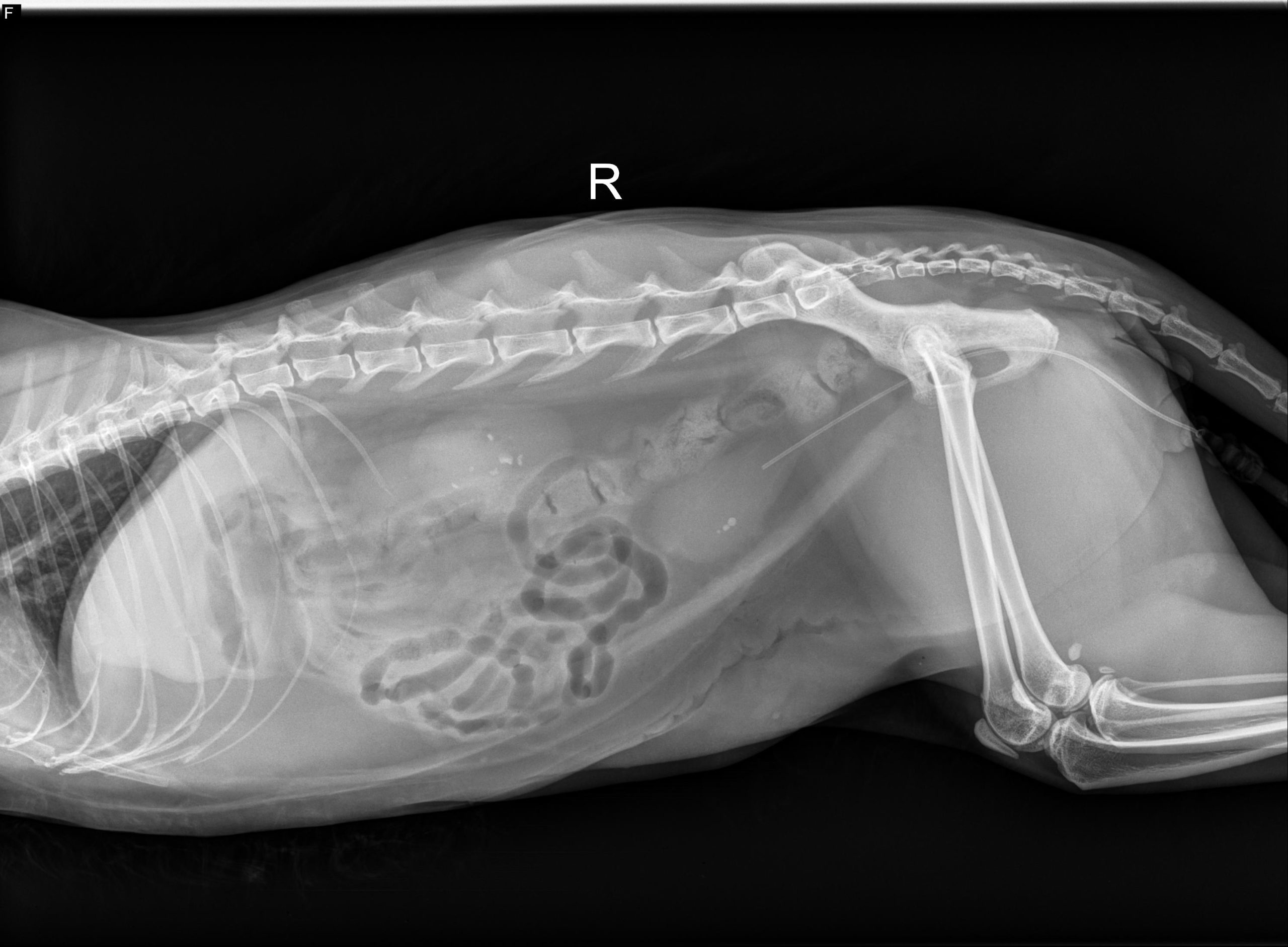
Update: My cat went through a cystotomy on Friday, the surgery went well and he was sent home the same day. Unfortunately he was still blocked as the surgeon did not remove the stones in his urethra (He did not take any xrays after the surgery and also discharged my cat without making him pee on his own). I rushed him to the ER as he was very restless and trying to pee, the ER doctor immediately unblocked him with a catheter and while doing so, she was able to push the stones back into the bladder. Xrays (attached) were taken which shows three stones in the bladder. As the cost of ER was adding up and the surgeon who did his surgery was not available over the weekend, I decided to shift him with the catheter on to the hospital where his surgery was done. I would like to add that in the initial surgery, the surgeon successfully removed all the stones in his bladder but the stones in the urethra were left behind even though he said he flushed them. The ER doctor is very certain that she pushed those stones back into the bladder while unblocking him the second time when he landed in the ER post the surgery.

My cat is currently doing well, he is on Ivy and has a catheter on. He is on CD food since two days. The urine color has improved from bloody to fairly clear. Urinalysis results showed struvite (Ammonium Mg Phosphate) crystals . I will be meeting the surgeon tomorrow and need your advice on what should be the next steps for my cat. Which of the following would you advise?

1. Re surgery to remove the remaining three stones from the bladder. After the initial surgery, the surgeon had mentioned that my cats heart is weak and hence he had to adjust the anesthesia to a lower level (1 instead of the usual 2), though the ER doctor does not see why would that be the case as there is no murmur seen in his reports and he has taken the sedation well while he was unblocked twice in the ER.

2. CD food therapy: Urinalysis results showed struvite (Ammonium Mg Phosphate) crystals. Should we remove the catheter, make him pee on his own at the hospital and then get him home. Watch closely for re blockage while continuing his CD diet. What are the chances of his re blockage? Will the bladder have greater chances of rupture if he gets re blocked since he just had surgery?

Please advise.

@KristaMagnifico

0 Responses
Question
Profile Image
Mik | 3 years ago
My Cat Developed A Hematoma So We Took Her To The Vet And They Charged Us $400 …

My cat developed a hematoma so we took her to the vet and they charged us $400 to drain it without anesthesia. After about 2 weeks it filled back up again so we took her to a different vet and they want us to spend $1,000 to have it surgically drained but with no guarantee that it won’t come back. Will it heal on its own or is it worth it to spend the $1,000 with the chance that it might come back?

1 Response

Comments

  1. Krista Magnifico

    Hello,

    I’m so sorry for the delay. I cannot imagine any kind of surgical correction of this condition that warrants a $1000 fee.

    Please let me know what happened. I would be really curious about how this fee is justified. Email me at Krista@pawbly.com